From Grain to Flake: What Oat Processing Changes
Oat processing explains why groats, steel-cut oats, rolled oats, and instant oats cook differently, so you can choose a form that suits your bowl.
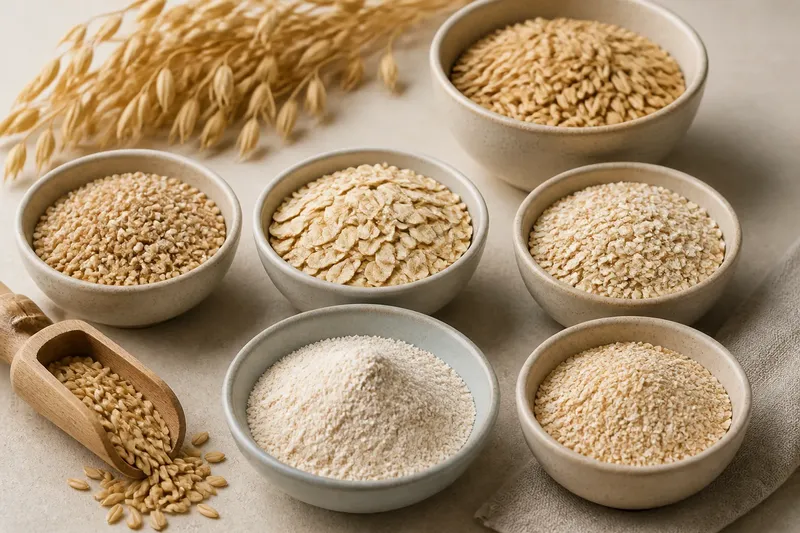
Oat processing changes how quickly a pot of oats softens, but the path is more physical than mysterious: grain is cleaned, its tough outer hull is removed, and the edible kernel is cut, steamed, rolled, or further reduced in size. Knowing those changes makes the names on a bag easier to connect with the texture and cooking method you want.
Cleaning separates grain from field debris
Oats arrive at a mill with more than edible kernels. Screens, air currents, and other sorting equipment remove light chaff, stray plant material, and debris, while additional sorting separates kernels from unwanted grains or damaged pieces. The exact equipment varies, but the purpose is straightforward: prepare a consistent crop for milling.
The oat kernel is enclosed by a firm hull, which is not the part most people cook. A mill removes it to expose the groat, the kernel used for food. The groat contains the bran, germ, and starchy interior; it is still a whole-grain form because those parts remain together.
This distinction helps decode “whole oat” language. A groat is whole, but so is a rolled oat: rolling changes its shape without separating its main kernel parts. Shape and degree of physical processing are related, but they are not the same question.
Heat prepares groats for storage and shaping
After dehulling, groats are commonly heated, often with steam. This treatment helps stabilize the grain and prepares it for the operations that follow. It also softens the groat, making it easier to cut or flatten without shattering it into an uncontrolled mix of pieces.
Heating is part of processing, not a synonym for a particular oat style. The familiar forms—steel-cut, rolled, and quick or instant oats—are largely distinguished by how the groat is divided and shaped after preparation. Pack directions remain useful because thickness and processing details can differ among products with similar names.
Steel-cut oats keep the kernel in pieces
Steel-cut oats are groats cut into smaller chunks with blades. They are not whole groats, but they retain a substantial, irregular piece of kernel rather than being pressed flat. In the pot, water has to work into those pieces, so they generally need more cooking time than thin rolled oats and produce a chewy, distinct texture.
That form can suit a breakfast where individual pieces and a firm bite are welcome. It is less convenient when the aim is a soft bowl on short notice. A lid and a gentle simmer help the pieces cook evenly; stirring now and then keeps the bottom from catching, but constant stirring is not necessary.
Rolling turns groats into familiar flakes
To make rolled oats, prepared groats pass between rollers and become flat flakes. The broad, thin shape gives hot liquid more surface to reach than it can reach on a thick chunk. As a result, rolled oats cook more readily and tend to soften into a cohesive bowl while retaining some texture.
“Old-fashioned” usually refers to this familiar rolled form, while “quick” oats are rolled thinner or otherwise processed to cook more rapidly. The names describe useful distinctions, but they do not set an exact universal thickness. Check the package directions if timing or final texture matters.
Rolled oats also hold their shape in uses beyond porridge. They can add a tender chew to a baked mixture, bind a patty, or form a rough topping. The flake is still recognizable after cooking, unlike a finely milled oat ingredient that disperses more readily.
Smaller pieces soften sooner but lose definition
Quick oats are typically cut smaller, rolled thinner, or processed to reduce the time they need to hydrate. Instant oats are often more finely cut or flaked and may be precooked before drying. Because the pieces are small and readily absorb liquid, they can make a soft, uniform porridge with little simmering.
That convenience comes with a texture trade-off, not a moral one. If you want separate flakes or a chewy bite, a smaller form may feel too smooth. If you want oats to blend into a muffin batter or thicken a soft breakfast, the same fine texture can be useful.
Say you have a packet of steel-cut oats but want a bowl that cooks more quickly. You could choose rolled oats next time, using the package directions as a starting point; the expected result is a softer bowl with less distinct kernel pieces. The change comes from the smaller, flatter form, not from a different grain.
Oat flour changes the role of the grain
Oat flour is made by grinding oats into fine particles. It can thicken a mixture or contribute a tender, sometimes slightly crumbly texture in baking. It does not behave exactly like intact flakes, since grinding removes the visible structure that would otherwise remain in a bowl or batter.
Recipes may call for a specific form because liquid reaches flour, flakes, and chunks differently. Swapping one for another can alter how quickly a mixture thickens and whether the oats remain noticeable. When adapting a recipe, begin with its stated form rather than assuming every oat product is interchangeable.
Which oat form fits the job?
Do steel-cut oats cook differently from rolled oats?
Yes. Steel-cut oats are kernel pieces, while rolled oats are flattened groats, so rolled oats generally soften sooner. Steel-cut oats usually keep a chewier, more distinct texture.
Are quick oats and instant oats the same?
Both are designed to cook faster than standard rolled oats, but the processing and finished texture can vary by product. Read the package directions and look at the flakes: smaller, finer pieces tend to make a softer result.
Can rolled oats replace steel-cut oats?
They can work in some dishes, but the result will not have the same texture or cooking behavior. In a porridge, rolled oats usually become soft sooner; in a recipe, changing the form can affect how the mixture absorbs liquid.
Does processing mean oats are no longer whole grain?
Not necessarily. Cutting, rolling, or grinding changes the groat’s shape, while whole-grain status concerns whether its main kernel parts remain together. Product wording and applicable standards can vary, so check the label when that distinction matters.
Choose by texture, not by a hierarchy
There is no single best oat form for every kitchen. Steel-cut oats suit a slower, chewy bowl; rolled oats offer a familiar balance of softness and structure; quick or instant oats are handy when a smoother result is welcome; flour serves a different role in recipes. Oat processing is useful to understand because it predicts texture and cooking use, not because one shape is automatically superior.
It is not worth trying to infer every mill detail from a product name. Names give a practical starting point, while the visible form and package directions answer most everyday questions. For the next bowl, notice whether the oats are intact pieces, broad flakes, fine flakes, or powder: that small observation often tells you what the grain will do in the pot.