A pantry comparison, one label at a time
A pantry comparison helps you compare cooking role, storage directions, and package format so you can choose foods that suit your recipes and kitchen routine.
A pantry comparison is most useful when it starts with the decision you need to make: which of two foods will suit a recipe, your storage space, or a household need? Put the packages side by side, but treat ingredient details, serving information, and storage directions as tools to consult in whatever order fits that question. There is no single sequence that works for every pantry choice.
Choose products with the same kitchen job
Compare items that could reasonably fill the same role, such as two jars of pasta sauce or two cans of beans. A jar of marinara and a can of crushed tomatoes may both go into a pasta dinner, but they require different preparation, so a close label comparison may not help.
Keep the packages handy, or take a clear phone photo of the relevant panels while shopping. That makes it easier to check the details that bear on your choice without relying on a front-of-package impression or memory.
Let the meal determine which details matter
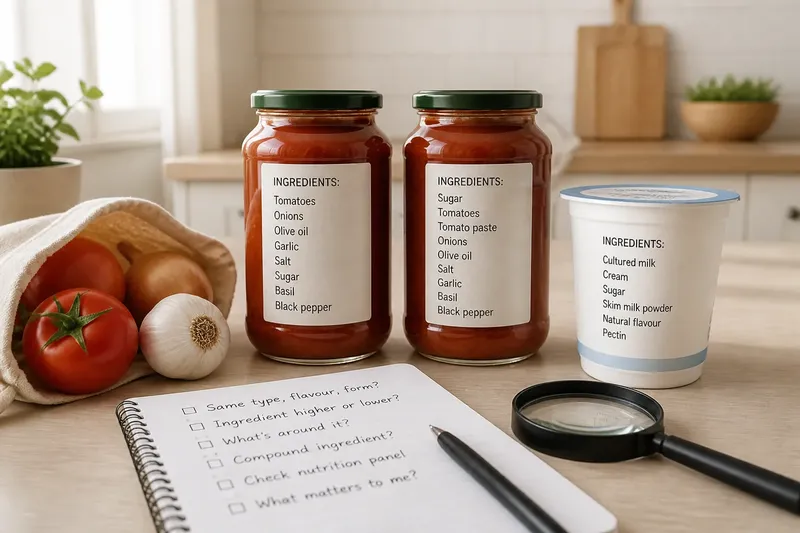
If you are choosing a sauce for a dish that needs little preparation, its listed herbs, garlic, oil, or sweetener may matter more than its serving information. If you want to season a sauce yourself, a plainer version may give you more room. Neither ingredient list is inherently better; the question is what each product brings to the food you plan to cook.
Say you have two jars of tomato sauce for pasta. One lists basil and garlic, while the other is plainer and includes oil and a thickening ingredient. If you want to serve the sauce with minimal adjustment, the first may suit your plan; if you will add vegetables and choose the seasoning yourself, the second may leave more flexibility. That is a decision about the meal, not a ranking of the products.
It is not worth scrutinizing every ingredient difference if it will not affect the dish, a household need, or how you use the food. When an unfamiliar ingredient matters to an allergy or another health concern, check reliable manufacturer information and consult a qualified professional rather than guessing from its name.
Check serving information when comparing figures
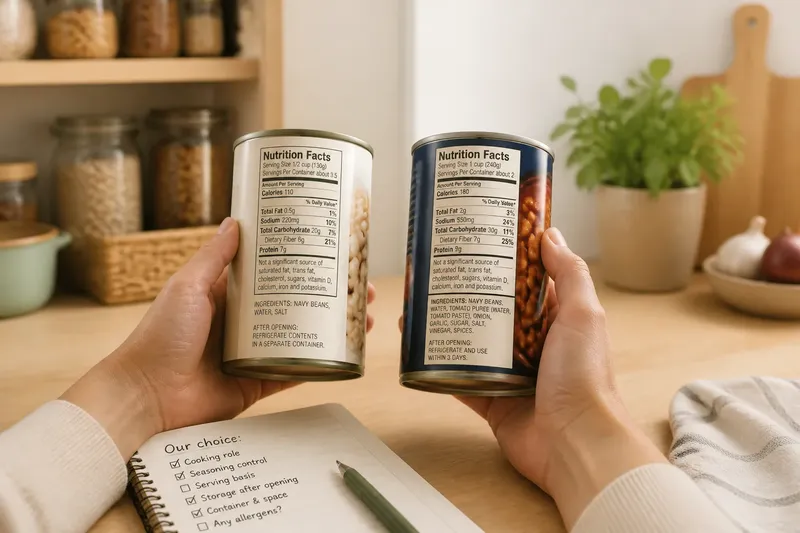
Nutrition information describes the serving amount printed on the package. Check the amount and units for both products before comparing a listed figure; if the serving bases differ, the numbers may describe unlike portions. A package serving is not a prediction of what you will eat.
If the distinction would change your decision, compare like amounts only when you can do so accurately using the label’s units. Otherwise, note that the serving bases differ and avoid drawing a direct conclusion from the figures. There is little value in recalculating labels into custom portions when that extra work would not affect your choice.
Use storage directions to judge pantry fit
Read each product’s directions for storage before opening and after opening. One item may need refrigeration once opened, while another may have different instructions. Consider whether you have room for it and whether its container and directions fit how you cook.
A large container may be convenient for frequent use but awkward if refrigerator space is limited. Follow the directions on the specific package rather than carrying storage assumptions over from a similar food. If a direction is unclear or a food-safety concern arises, check with the manufacturer or an appropriate food-safety professional.
Match the comparison to the decision
- Cooking role: If both products can fill the same role in your recipe, compare their relevant details; if not, decide whether you need a substitute or two different ingredients.
- Household need: If either label lists an ingredient or allergen relevant to your household, pause and verify the exact product information; if the concern is health-related or unclear, seek qualified advice before choosing.
- Preparation: If one product includes seasonings you want, choose it for convenience; if you want to control the flavor yourself, consider the plainer option instead.
- Serving basis: If the serving amounts and units match, compare the listed figures for the question at hand; if they do not, compare equivalent amounts only if you can do so accurately, or set the figures aside.
- After-opening directions: If you can follow the stated storage instructions, keep the product in consideration; if not, choose an option whose directions fit your kitchen routine.
- Container and space: If the package fits your available shelf or refrigerator space, it may suit your routine; if it does not, consider a more manageable format or another product.
- Unclear wording: If a detail could affect a health need or your decision and the label does not explain it, check manufacturer information or ask a qualified professional; if it is immaterial to your use, move on.
Which pantry label details should guide a choice?
Should I pick the product with fewer ingredients?
Not on that basis alone. A shorter list may suit a recipe you want to season yourself, while a longer list may include flavors that make the food more ready to use.
Can I compare nutrition figures when serving amounts differ?
Check the amount and units on both labels first. If the bases differ, compare equivalent amounts only when you can do so accurately and the distinction matters to your decision.
Can I assume similar foods have the same storage directions?
No; check each package, especially for instructions after opening. Similar products can have different directions, so follow the label on the item you buy.
What should I do with ingredient wording I do not recognize?
Do not infer its function from the name alone. Check the manufacturer’s information, and consult a qualified professional if the ingredient matters to an allergy or another health concern.
Work through a choice using the details that matter
Imagine you are choosing between two hypothetical cans of beans for a side dish. The first is plain and has a storage direction to refrigerate the contents after opening; the second is seasoned and comes in a package size your refrigerator shelf cannot accommodate once opened. You want to control the seasoning, and you have room for the first can.
First, both products can fill the same cooking role, so the comparison is useful. Next, the first can’s plain contents fit your plan to season the dish yourself, while the second’s seasoning does not offer an advantage for this meal. Then you check the serving information: the hypothetical labels use different serving amounts, so you set their figures aside rather than comparing them directly. Finally, you check the storage directions and available space. The first can remains the better fit for this particular meal and kitchen routine, while the second might suit a different recipe or storage situation.
For a pantry comparison, keep a short note of only the differences that could change your decision: preparation, serving basis, storage directions, or available space. The search phrase pantry comparison describes a small practical choice, not a contest between packages; the useful result is food that fits the meal and the way you keep it.